THE PHYSIOPH JOURNAL
A License Without Autonomy
Why Philippine physical therapists still need physician referrals—and what this means for professional autonomy, patient access, and modern care.
Philippine Health Policy • Physical Therapy
Filipino physical therapists are trained to examine, screen, reason, formulate a physical therapy diagnosis, plan care, recognize red flags, and refer when necessary. Yet the law still requires a physician’s prescription before they may practice physical therapy.
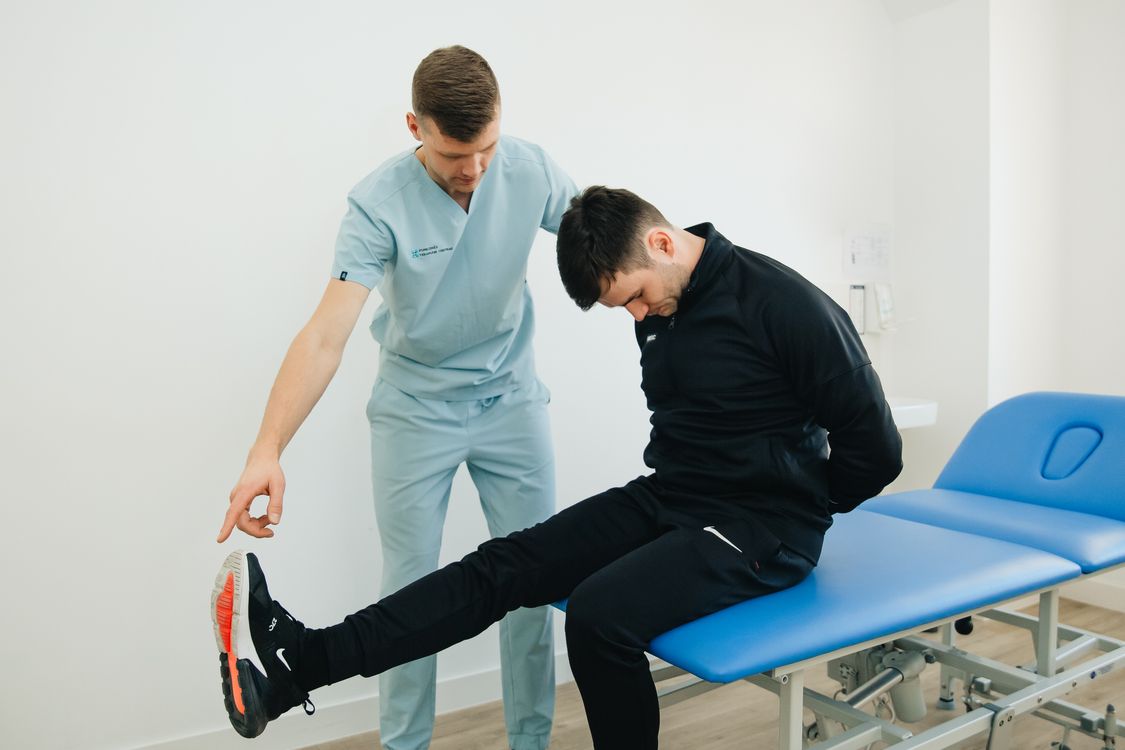
Imagine a healthy 28-year-old who twists an ankle playing basketball. It hurts. It is swollen. There is no obvious deformity. He wants a licensed physical therapist to examine the problem and decide whether it can be managed conservatively or needs medical investigation.
The PT has studied anatomy, pathology, biomechanics, orthopedics, neurologic rehabilitation, therapeutic exercise, examination, clinical reasoning, and red-flag screening. The PT completed an accredited professional program and passed a government licensure examination.
But the license is still not enough.
Before treating even an uncomplicated problem, Philippine law still puts a physician at the gate.
Not necessarily because the therapist found a fracture. Not because the patient needs medication. Not because surgery is being considered. Not because the therapist found a neurological or systemic warning sign.
The referral is required because Republic Act No. 5680 says so.
And that law was enacted in 1969.
A modern profession, governed by a 1969 gatekeeping rule
Section 12 of RA 5680 states that no person shall practice or offer to practice physical therapy without both a valid certificate of registration and “the prescription of a duly registered physician.”
That creates an unusual professional arrangement. The State educates the PT. The State examines the PT. The State licenses the PT. Yet another licensed profession must still authorize the patient’s entry into treatment.
1969 Year RA 5680 was enacted | 50 U.S. states now allowing provisional or unrestricted direct access | 90,401 Patients in a 2026 systematic review of direct-access physiotherapy |
This is not merely an HMO rule or a hospital administrative preference. The physician-first model is written into the statute governing the profession.
The contradiction is already inside Philippine PT education
CHED Memorandum Order No. 55, Series of 2017 describes competencies that include comprehensive examination and evaluation, clinical reasoning, health-status screening, formulation of a physical therapy diagnosis, and determining when referral to another provider is necessary.
We train PTs to decide when referral is necessary — then legally require referral before treatment anyway.
Nobody is arguing that PTs should prescribe antibiotics, perform surgery, independently manage myocardial infarction, or ignore unexplained neurological and systemic symptoms.
If a licensed PT is educated to screen a patient, identify whether the condition is appropriate for PT, recognize red flags, and refer when necessary, why should every patient still require physician permission before PT treatment can begin?
Read CHED CMO No. 55, Series of 2017 →
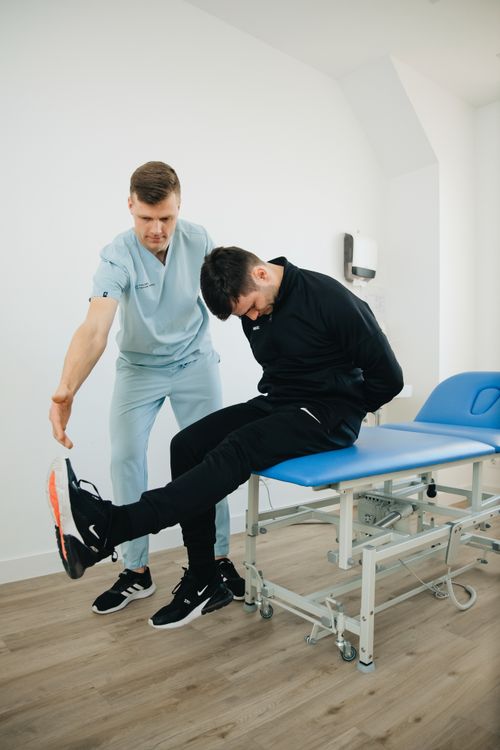
Direct access is not the absence of referral
A competent first-contact PT should refer a patient when the presentation suggests suspected fracture, progressive neurological deficit, cauda equina syndrome, serious infection, malignancy, cardiovascular disease, unexplained systemic illness, or anything else outside the therapist’s scope or requiring medical investigation.
Direct access means the referral decision is triggered by the patient’s clinical needs — not automatically by the profession the patient wants to see.
Philippines vs. United States
The contrast with the United States is useful precisely because American PT regulation did not simply abolish accountability.
Issue | Philippines | United States |
|---|---|---|
Patient entry | RA 5680 retains a physician-prescription requirement. | All 50 states permit provisional or unrestricted direct access. |
How risk is controlled | Universal gatekeeping before PT treatment. | State-specific limits, duties, referral triggers, and professional accountability. |
Role of the PT | Licensed clinician whose treatment access remains dependent on physician prescription. | Often able to act as a first-contact provider within the limits of state law. |
As of July 1, 2025, the American Physical Therapy Association reports that every U.S. state, the District of Columbia, and the U.S. Virgin Islands has either provisional or unrestricted direct access to PT evaluation and treatment.
Some states still impose conditions. That is important. The American model is not “anything goes.” It is better understood as risk-based regulation.
APTA: Direct Access Advocacy →

What does the evidence say?
A 2026 systematic review examined 21 studies involving 90,401 patients with musculoskeletal disorders. The review found that direct-access physiotherapy was associated with fewer general-practitioner consultations, generally reduced imaging and medication use, and clinical outcomes that were largely non-inferior to physician-referred pathways.
In the studies that specifically reported safety outcomes, no serious adverse events attributable to direct access were identified. The authors also emphasized an important limitation: much of the evidence was observational, and certainty ranged from moderate to very low.
The evidence does not justify pretending direct access is risk-free. But it also makes it difficult to portray physician-first access as the only responsible model.
Read the 2026 systematic review →
The patient pays for the extra door
PAIN / INJURY → PHYSICIAN VISIT → PRESCRIPTION → PT ASSESSMENT
Every additional step has a cost: another appointment, another consultation fee, additional transportation, another absence from work, another opportunity for the patient to abandon care.
If the State imposes an extra health-care visit on every PT patient, the State should be able to explain the patient-safety benefit that justifies that cost.
Is it a political monopoly?
The word monopoly is emotionally powerful, so it needs precision.
There is no reason to accuse physicians collectively of conspiracy or bad faith. Many physicians already work closely and respectfully with PTs, and genuine medical collaboration is essential.
But Philippine law does create a protected gatekeeping position: before another licensed profession may provide much of its core treatment, a physician must first authorize that treatment.
That can reasonably be described as a legally protected gatekeeping structure. One may also argue that it has monopoly-like characteristics because the State reserves the gateway to one profession.
An outdated monopoly does not require bad people. It only requires an old rule that nobody has successfully changed.
Autonomy is not a privilege. It is responsibility.
Filipino PTs who want direct access also need to accept the responsibilities that come with it.
- Stronger red-flag screening and differential clinical reasoning.
- Clear mandatory-referral standards.
- High-quality documentation and evidence-based care.
- Continuing professional development.
- Accountability when a therapist fails to recognize findings outside PT scope.
Direct access should never mean professional arrogance. It should mean that a profession accepts responsibility for the clinical decisions it is educated and licensed to make.
This should not be PT versus MD
The strongest case for reform is not anti-doctor.
“I examined this patient. The presentation is appropriate for PT, and I can manage it within my scope.”
And, when necessary:
“I examined this patient. Something does not fit a routine musculoskeletal presentation. This patient needs your medical expertise.”
That is what collaboration looks like when both professions are allowed to exercise professional judgment.
What reform could look like
- Remove the blanket physician-prescription requirement for conditions that appropriately fall within PT scope.
- Legally recognize PT examination, PT diagnosis, prognosis, and clinical decision-making within defined professional boundaries.
- Create explicit red-flag and referral obligations rather than assuming every case needs physician permission from the start.
- Consider competency or experience requirements for unrestricted direct-access practice if lawmakers believe additional safeguards are needed.
- Keep physicians fully involved when medical management is indicated.
- Collect Philippine outcome and safety data so future regulation is based on evidence rather than professional territory.
That is modern regulation: give competent professionals room to practice, define the boundaries clearly, and hold them accountable when they cross those boundaries.
The question for the Philippine PT profession
Why are licensed Filipino physical therapists still regulated as though their profession never evolved beyond 1969?
RA 5680 was enacted more than half a century ago. PT education has changed. Rehabilitation science has changed. Clinical reasoning has changed. Health systems have changed. Other jurisdictions have changed.
The Philippines already educates PTs to examine, screen, reason, plan, treat, identify danger, and refer.
The better question is whether Philippine law is prepared to demand the responsibility that true autonomy requires — and then finally allow the profession to exercise it.
The profession has evolved. The law has not.
Sources and further reading
- Republic Act No. 5680
- CHED Memorandum Order No. 55, Series of 2017
- American Physical Therapy Association — Direct Access Advocacy
- 2026 systematic review of direct-access physiotherapy
Editorial note: This article is policy commentary, not legal or medical advice. U.S. direct-access rules differ by state, and payer requirements may differ from professional scope-of-practice rules.